
When people think about what makes a great photo, they often focus on the camera, the location, or even what they’re wearing. While those things definitely matter, there’s one factor that has a bigger impact on your photos than almost anything else: lighting. Lighting affects your photos more than you think.
As a photographer, I can take you to the most beautiful location in Minnesota or Wyoming, but if the lighting isn’t right, your photos won’t have the same dreamy, vibrant, and natural look you’re hoping for. Understanding how light works can help you plan your session and get the best possible images.
Why Lighting Matters
Light affects everything in a photograph:
- Skin tones
- Colors
- Sharpness
- Mood
- Depth
- Overall image quality
The same location can look completely different depending on the time of day and the quality of light available. That’s why photographers are always talking about “golden hour” and carefully planning session times.
Let’s look at a few common lighting scenarios and how they affect your photos.
Golden Hour: The Photographer’s Favorite
Golden hour happens shortly after sunrise and before sunset. The sun sits lower in the sky, creating soft, warm, flattering light.
During golden hour:
- Skin tones appear warm and natural.
- Harsh shadows are minimized.
- Colors look rich and vibrant.
- The light creates a beautiful glow around couples and families.
This is why most engagement sessions, maternity sessions, and family sessions are scheduled in the evening.
If you’ve ever wondered why photographers want to start your session close to sunset, this is the reason.
Midday Sun: Beautiful Location, Challenging Light
Imagine standing in an open field at noon on a sunny day.
The sun is directly overhead, which creates:
- Dark shadows under eyes
- Bright highlights on foreheads
- Squinting
- High contrast between light and dark areas
While photos can absolutely still be taken during midday, photographers often need to find shade or adjust locations to create more flattering light.
This is one reason many wedding photographers recommend scheduling portraits later in the day whenever possible.
Open Shade: A Hidden Gem
Open shade is one of my favorite lighting situations.
Think about standing under a large tree, next to a building, or in a shaded area while still facing open sky.
Open shade provides:
- Even lighting across the face
- Soft skin tones
- Minimal squinting
- Consistent exposure
Many downtown locations and wooded areas naturally provide beautiful open shade that photographs incredibly well.
Overcast Days: Nature’s Softbox
Many people worry when they see clouds on session day, but photographers often get excited.
Clouds act like a giant diffuser, softening sunlight and creating even lighting.
Benefits of cloudy days include:
- No harsh shadows
- Soft skin tones
- Rich colors
- Comfortable temperatures
Overcast skies can create a romantic and timeless look, especially for engagement sessions and weddings.
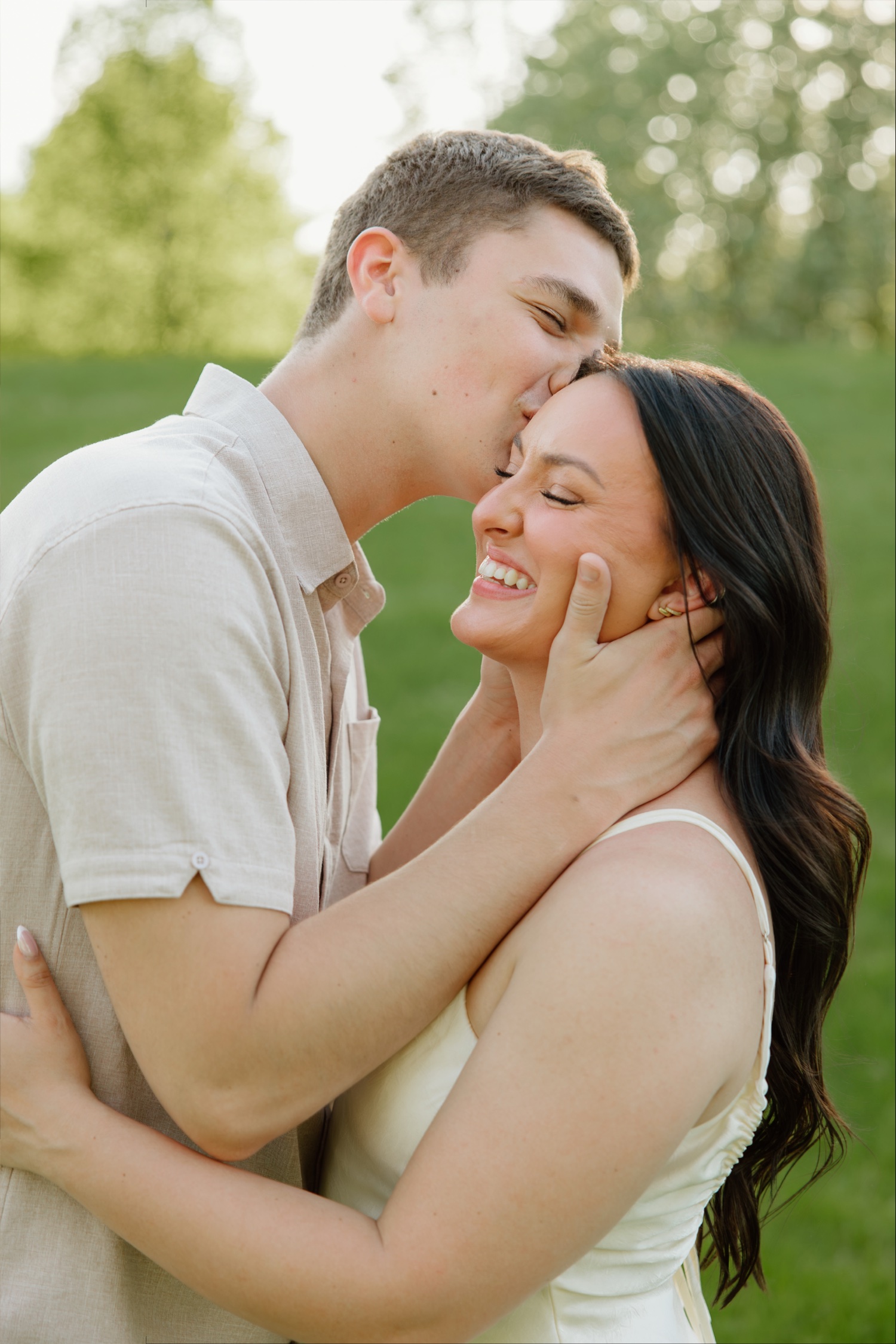
Backlighting: Creating That Dreamy Glow
Backlighting occurs when the sun is behind the subject rather than directly in front of them.
This technique can create:
- Beautiful sun flares
- A glowing effect around hair
- Soft, romantic images
- Added depth and dimension
Many of those dreamy sunset photos you see on Instagram are created using backlighting.
Indoor Lighting Matters Too
Lighting isn’t just important outdoors.
When getting ready on your wedding day, the room you choose can dramatically impact your photos.
A room with:
- Large windows
- Neutral-colored walls
- Plenty of natural light
will photograph much differently than a dark room with only overhead lighting.
Natural window light creates soft, flattering images that help tell the story of your day beautifully.
What About Dusk?
While golden hour gets most of the attention, the 15–30 minutes after the sun dips below the horizon can be just as beautiful. This time is often called blue hour or dusk.
During dusk:
- Colors become softer and cooler.
- The sky often turns shades of pink, purple, and blue.
- Images can feel moodier and more romantic.
- You’ll see more of the natural colors in the sky rather than the warm glow from the sun.
However, because there’s less available light, photos may not appear quite as bright and crisp as those taken during golden hour. This is why photographers carefully balance timing throughout a session. If you’re hoping for those glowing, sun-soaked images, we’ll want to prioritize shooting before sunset. If you love a more dreamy, intimate feel with colorful skies, staying out through dusk can create some truly magical photos.
Some of my favorite images are actually taken in those final few minutes of light when the sky puts on a show and the day feels calm, quiet, and romantic.
Wedding Day Lighting Examples
Scenario #1: First Look at Noon
A first look scheduled in direct sunlight at noon may result in harsher shadows and brighter highlights.
Scenario #2: Indoor Ceremony with Large Windows
Natural light streaming through windows creates bright, clean images.
Scenario #3: Dark Indoor Ceremony
A dimly lit ceremony may require additional camera settings and equipment, resulting in a different overall look and feel.
Trust Your Photographer’s Timing Recommendations
When photographers recommend a specific session time, it isn’t just because it’s convenient.
We’re constantly thinking about where the sun will be, how the light will fall on your face, and what will help create the best images possible.
The truth is, lighting can completely transform a photo. It’s often the difference between a good image and a stunning one.
Final Thoughts
Lighting is one of the most important elements in photography, and it affects your images more than most people realize. Whether you’re planning engagement photos, family portraits, maternity photos, or your wedding day timeline, understanding how light works can make a huge difference in the final gallery.
The good news? You don’t have to figure it all out on your own. That’s part of my job. I’ll help guide you to the best locations, recommend the ideal timing, and make sure we take advantage of the most beautiful light available so you can focus on enjoying the moment.
Looking for a Minnesota wedding photographer, Fargo wedding photographer, or Wyoming wedding photographer who knows how to work with natural light? I’d love to help tell your story.

Comments +